
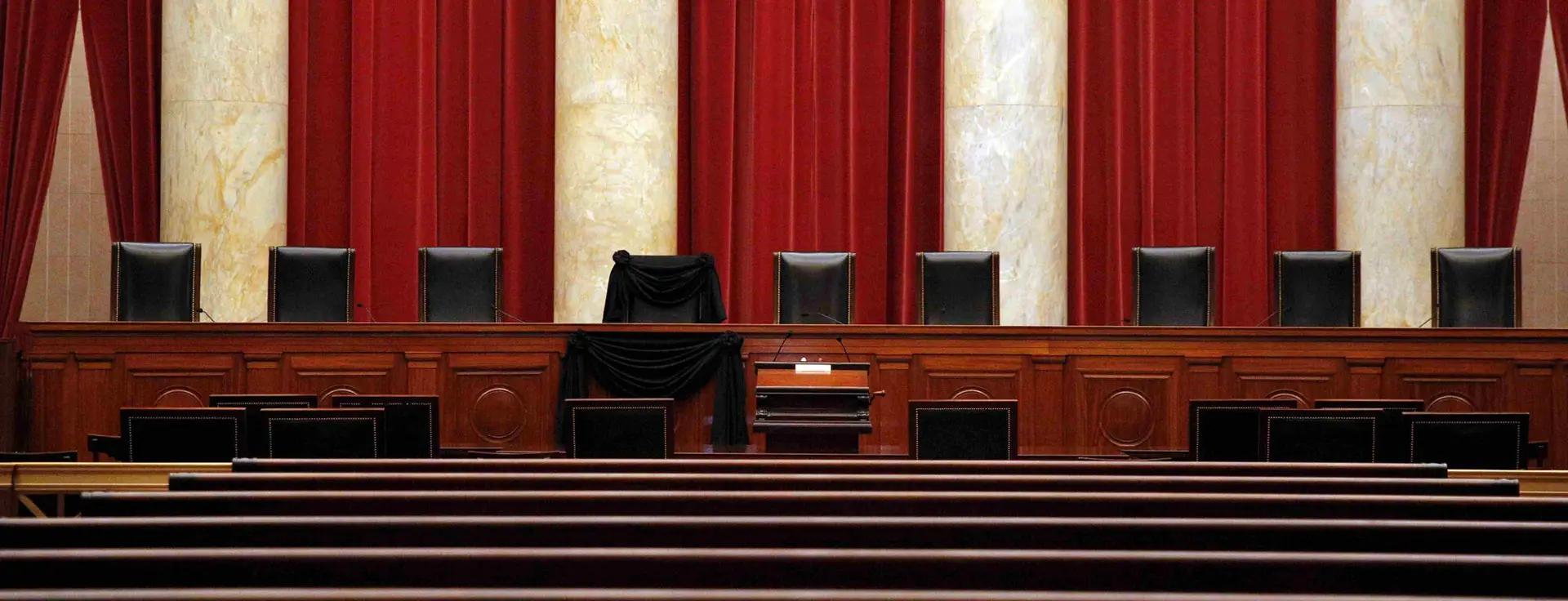
The Supreme Court's Shadow Docket: Major Decisions, 2024–2026
Updated through June 2026 | Prepared for i-tell-you.com
The Supreme Court's shadow docket — formally called the emergency or interim docket — is how the Court handles urgent requests for immediate relief outside its normal calendar of argued cases. Decisions are issued quickly, often as brief unsigned orders, sometimes with no explanation at all. The justices' individual votes are frequently not disclosed. Critics argue this process lacks the transparency of the Court's regular merits docket, where cases are fully briefed, orally argued, and resolved in signed opinions. The shadow docket has grown dramatically in recent years: the Trump administration's first term (2017–2021) filed 41 emergency applications in four years, compared to just eight across the prior 16 years of the Bush and Obama administrations combined. Since January 20, 2025, the pace has accelerated further still.
2024 — Biden Administration Era (October 2023 Term)
| Date | Case Name | What It Was About | What the Court Did |
|---|---|---|---|
| Jan. 5, 2024 | Moyle v. United States / Idaho v. United States | Idaho enacted one of the nation's strictest abortion bans. The federal government argued the ban conflicted with EMTALA — the federal law requiring hospital emergency rooms to provide stabilizing treatment — when a pregnant patient's health was at serious risk. A lower court had blocked the Idaho law; the state asked the Supreme Court to let it take effect while the case was litigated. | MIXED — Stay granted, then vacated. The Court first stayed the lower court's injunction, allowing Idaho's ban to take effect briefly. It then agreed to hear the case. After oral argument in April 2024, the Court in June 2024 dismissed the case as improvidently granted (a "DIG"), vacated its own earlier stay, and sent the matter back to lower courts — restoring the emergency abortion protections in the interim without ruling on the underlying legal question. |
| June 27, 2024 | Ohio v. Environmental Protection Agency | The EPA issued its "Good Neighbor Rule" requiring 23 upwind states to cut nitrogen oxide emissions to protect air quality in downwind states. Several states and industrial companies challenged the rule; lower courts had declined to halt it while litigation continued. | STAY GRANTED — Rule blocked. In a 5–4 decision written by Justice Gorsuch, the Court halted enforcement of the EPA rule. The majority concluded that the challengers were likely to succeed on the merits because the EPA had failed to adequately explain its reasoning when states raised concerns during the comment period. Justice Barrett wrote in dissent that the emergency docket "requires us to evaluate quickly the merits of applications without the benefit of full briefing." |
2025 — Second Trump Administration Takes Office (January–September 2025)
Beginning January 20, 2025, the pace of shadow docket activity surged dramatically. By early February 2026, the Court had issued 29 Trump-related shadow docket decisions, the large majority siding with the administration.
| Date | Case Name | What It Was About | What the Court Did |
|---|---|---|---|
| Mar. 5, 2025 | Department of State v. AIDS Vaccine Advocacy Coalition | The Trump administration abruptly froze foreign aid payments. A district court ordered the government to pay roughly $2 billion owed to independent organizations for foreign development work already completed before February 13, 2025. The State Department asked the Supreme Court to vacate that order. | DENIED — Lower court order stood. The Court refused to block the district court's payment order, one of the relatively rare early decisions that did not side with the Trump administration. |
| Apr. 4, 2025 | Department of Education v. California | The Trump administration canceled hundreds of millions of dollars in federal education grants. A district court ordered the grants reinstated. The Department of Education asked the Supreme Court to vacate that reinstatement order. | VACATED — Reinstatement order blocked. The Court sided with the administration and vacated the district court's order requiring the grants to be restored. |
| Apr. 8, 2025 | Office of Personnel Management v. American Federation of Government Employees | The administration laid off approximately 16,000 federal employees. A district court ordered them reinstated while litigation continued. The Office of Personnel Management sought a stay. | STAY GRANTED — Reinstatement blocked. The Court stayed the lower court's reinstatement order, allowing the layoffs to stand while legal challenges worked through the courts. |
| Apr. 27, 2025 | Trump v. J.G.G. | The administration invoked the Alien Enemies Act of 1798 to deport alleged Venezuelan gang members (Tren de Aragua) without the usual immigration court proceedings. A district court temporarily blocked the immediate deportations. | VACATED — Deportation block lifted. The Court vacated the district court's order halting deportations, though it held that the individuals must be given notice and an opportunity to challenge their removal before being deported to a third country. |
| May 6, 2025 | United States v. Shilling | The Defense Department issued a policy disqualifying individuals with gender dysphoria from military service. A lower court enjoined the policy. | STAY GRANTED — Transgender military ban allowed to take effect. The Court stayed the injunction, allowing the Defense Department to enforce its policy while litigation continued. |
| May 19, 2025 | Noem v. National TPS Alliance | Secretary of Homeland Security Kristi Noem terminated Temporary Protected Status (TPS) for hundreds of thousands of Venezuelan immigrants who had received that protection under the Biden administration. A district court blocked the termination. | STAY GRANTED — TPS termination allowed to proceed. The Court allowed the administration to proceed with ending TPS protections for Venezuelans while the legal challenge continued in lower courts. |
| May 22, 2025 | Trump v. Wilcox | President Trump fired Gwynne Wilcox from the National Labor Relations Board and Cathy Harris from the Merit Systems Protection Board — both independent agencies whose members are protected by statute from removal without cause. District courts ordered both reinstated. | STAY GRANTED — Reinstatement orders blocked. The Court stayed the reinstatement orders, allowing the removals to stand pending further litigation. The underlying case on the merits was later taken up on the regular docket. |
| May 30, 2025 | Noem v. Doe | The administration moved to end humanitarian parole programs under which more than 500,000 immigrants from Cuba, Haiti, Nicaragua, and Venezuela had legally entered the United States. A district court blocked the termination. | STAY GRANTED — Parole program termination allowed. The Court stayed the lower court's order, permitting the administration to wind down the parole programs. |
| June 6, 2025 | Social Security Administration v. American Federation of State, County, and Municipal Employees | Investigators from the Department of Government Efficiency (DOGE) sought access to Social Security Administration databases containing sensitive personal information of millions of Americans. A district court blocked that access. | STAY GRANTED — DOGE access to SSA records permitted. The Court stayed the district court's order blocking DOGE investigators from accessing the SSA's data systems. |
| June 23, 2025 | Department of Homeland Security v. D.V.D. | The administration sought to deport noncitizens to "third countries" — countries other than their home countries — without first confirming that those individuals would not face torture upon arrival. A district court effectively prohibited that practice. | STAY GRANTED — Third-country deportations without anti-torture confirmation allowed. The Court stayed the lower court's protective order. Justice Sotomayor dissented sharply, arguing the majority had rewarded "flagrantly unlawful conduct." |
| June 27, 2025 | Trump v. CASA | On his first day in office, President Trump signed an executive order purporting to end birthright citizenship — the 14th Amendment guarantee that all persons born on U.S. soil are citizens. Multiple district courts blocked the order with nationwide injunctions. The administration asked the Supreme Court to narrow the scope of those injunctions. | PARTIAL STAY — Nationwide injunctions curtailed; constitutionality unresolved. In a 6–3 decision authored by Justice Amy Coney Barrett, the Court held that federal district courts likely lack the authority to issue nationwide (universal) injunctions extending beyond the named parties. The Court did not rule on whether the executive order itself was constitutional — that question remains unresolved. The decision was widely seen as a structural victory for the executive branch. |
| July 8, 2025 | Trump v. American Federation of Government Employees | Trump issued an executive order directing all federal agencies to formulate plans for massive workforce reductions. A district court issued a nationwide injunction blocking the order. | STAY GRANTED — Workforce reduction planning order unblocked. The Court stayed the nationwide injunction, allowing the administration's workforce reduction planning to proceed. |
| July 14, 2025 | McMahon v. New York | The Department of Education fired 1,378 employees as part of a plan to pare the agency down to only those staff needed to perform legally required functions. A district court ordered those employees reinstated. | STAY GRANTED — Reinstatement order blocked. The Court stayed the reinstatement order, allowing the mass firings to stand during ongoing litigation. |
| July 23, 2025 | Trump v. Boyle | President Trump fired three members of the Consumer Product Safety Commission — an independent agency — without the cause required by statute. A district court ordered them reinstated. | STAY GRANTED — Reinstatement blocked. The Court stayed the lower court's order, continuing the pattern of allowing the administration's removal of independent agency members to stand while appeals proceeded. |
| Sept. 8, 2025 | Noem v. Perdomo | Immigration officers in Southern California were using factors such as apparent race or ethnicity, speaking Spanish or accented English, presence at locations where undocumented immigrants gather, and type of employment to identify potential undocumented immigrants for detention. A district court barred use of those factors. | STAY GRANTED — Racial and ethnic profiling criteria permitted during litigation. The Court stayed the lower court's order, allowing immigration officers to continue using those factors while the case proceeded. |
| Sept. 10, 2025 | South Carolina v. Doe | South Carolina passed a law requiring students to use school bathrooms corresponding to their biological sex at birth. A transgender student challenged the law. The Fourth Circuit Court of Appeals required the school to allow the student to use boys' bathrooms pending the legal challenge. South Carolina asked the Supreme Court to block that order. | DENIED — Transgender student's bathroom access preserved. The Court declined to block the Fourth Circuit's order, allowing the transgender student to continue using facilities consistent with his gender identity while the case continued. |
| Sept. 22, 2025 | Trump v. Slaughter | President Trump fired Alvaro Bedoya from the Federal Trade Commission in March 2025. FTC commissioners are statutorily protected from removal without cause. A district court ordered Bedoya reinstated. The case was later consolidated with a challenge to the firing of FTC member Gail Slaughter. | STAY GRANTED — FTC firing allowed to stand. The Court stayed the reinstatement order. Justice Kagan dissented, arguing the emergency docket was being improperly used to shift authority from Congress to the President and reshape the separation of powers. The case was subsequently accepted on the merits docket for the 2025–26 term. |
| Oct. 3, 2025 | Noem v. National TPS Alliance (second ruling) | A second ruling involving Noem's termination of Temporary Protected Status for Venezuelan immigrants, this time concerning the 2023 Biden-era TPS extension. A district court had again blocked the termination. | STAY GRANTED — Second TPS termination allowed to proceed. The Court again stayed the lower court's protective order, allowing the administration to move forward with ending the TPS designation. |
| Nov. 6, 2025 | Trump v. Orr | Trump issued an executive order directing the State Department to list passport holders' biological sex at birth rather than their gender identity. A district court ordered that passports continue to reflect gender identity. | STAY GRANTED — Passports to reflect biological sex. The Court stayed the district court's order, allowing the administration's passport policy to take effect. |
| Dec. 4, 2025 | Abbott v. League of United Latin American Citizens | Texas drew a new congressional map for the 2026 midterm elections. A federal district court ruled the map unlawful and prohibited its use. Texas Governor Greg Abbott asked the Supreme Court to allow the new map to be used anyway. | STAY GRANTED — New Texas congressional map allowed. The Court stayed the lower court's order blocking the map, permitting Texas to use its new district lines for the 2026 midterms while litigation continued. |
| Dec. 23, 2025 | Trump v. Illinois | Trump sought to federalize Illinois National Guard troops and deploy them within the state for immigration enforcement — over the objection of Illinois's governor. A district court blocked the deployment. | DENIED — Deployment blocked. The Court declined to stay the district court's order preventing the forced federalization and deployment of the Illinois National Guard. |
2026 — Continuing Emergency Docket Activity
| Date | Case Name | What It Was About | What the Court Did |
|---|---|---|---|
| Feb. 4, 2026 | Tangipa v. Newsom | California drew a new congressional map for the 2026 midterms. A group of California Republican voters asked the Supreme Court to block the map, arguing it diluted Republican voting power. | DENIED — California map allowed to stand. The Court declined to block the district court's order permitting California to use its new congressional map. |
| Feb. 26, 2026 | Mirabelli v. Bonta | California had policies requiring teachers to address students by their preferred names and pronouns and to inform parents about a student's gender transition only with the student's consent. A group of parents challenged these policies; a federal district court blocked them. The Ninth Circuit then stayed that block. The parents asked the Supreme Court to let the district court's order take effect. | MIXED — Parents' request granted; teachers' request denied. The Court vacated the Ninth Circuit's stay as to the parent-plaintiff group, allowing the lower court's order blocking the pronoun and notification policies to take effect for those plaintiffs. The Court simultaneously denied a similar request by California teachers. |
| Apr. 6, 2026 | Stephen K. Bannon v. United States | Steve Bannon, former advisor to President Trump, had been convicted of contempt of Congress for refusing to comply with a subpoena to testify before the House committee investigating the January 6, 2021 Capitol attack. The Court of Appeals for the D.C. Circuit upheld his conviction. The Trump administration asked the Supreme Court to vacate it. | VACATED AND REMANDED — Conviction effectively erased. The Court vacated the appellate court's ruling and sent the case back for reconsideration, with the practical effect of wiping out Bannon's contempt conviction. |
| May 14, 2026 | Danco Laboratories, LLC v. Louisiana | Louisiana sought to block patients in the state from receiving the abortion medication mifepristone (RU-486) by mail following telehealth consultations. The Fifth Circuit Court of Appeals had issued an order that would have temporarily prevented mail delivery of the drug in Louisiana. The drug's manufacturer asked the Supreme Court to block that order. | STAY GRANTED — Mail access to mifepristone preserved. The Court stayed the Fifth Circuit's order, allowing Louisiana patients to continue receiving mifepristone by mail while the challenge to its accessibility was litigated in the district court. This followed a 2024 Supreme Court merits decision that had rejected a nationwide challenge to the FDA's expanded authorization of the drug. |
Reading the Scorecard
Of the roughly 29 Trump-related shadow docket decisions issued between January 20, 2025, and early February 2026, at least 20 ruled in favor of the administration at least in part. Legal scholars have noted several patterns:
The scope of injunctions. The most structurally significant shadow docket ruling of this period was Trump v. CASA, which curtailed district courts' ability to issue nationwide injunctions. While that decision did not resolve the constitutionality of the birthright citizenship order itself, it fundamentally changed the procedural landscape for challenging executive actions — making it far harder for a single judge to halt a federal policy across the entire country.
Independent agency removals. A series of rulings — Wilcox, Boyle, Slaughter — allowed the administration to effectively remove members of independent agencies while litigation continued, raising serious questions about the President's power to dismiss officials Congress has tried to protect from at-will firing.
Dissents from the left. Justices Sotomayor and Kagan filed repeated and pointed dissents, accusing the majority of using the shadow docket to reshape the law without the transparency of full briefing and argument. Justice Kagan wrote that the emergency docket was being used "to transfer government authority from Congress to the President, and thus to reshape the Nation's separation of powers."
Occasional check on the administration. The Court was not uniformly compliant. It declined to block the lower court's order requiring foreign aid payments, refused to let Illinois National Guard troops be federalized for immigration enforcement, and preserved mifepristone mail access in Louisiana.
Endnotes and Sources
The primary source for Trump-era shadow docket rulings is Encyclopaedia Britannica's continuously updated reference article, "Major Shadow Docket Rulings of the U.S. Supreme Court During the Second Trump Administration (2025– )," last updated May 15, 2026. Additional sourcing: the Brennan Center for Justice's Supreme Court Shadow Docket Tracker; SCOTUSblog's Interim Docket 2025 tracker; the Congressional Research Service report "The 'Interim Docket' or 'Shadow Docket': Non-Merits Matters at the Supreme Court" (updated February 2026); and reporting from CBS News, PBS NewsHour, and the Associated Press on the Trump v. CASA nationwide injunctions ruling. The 2024-term Ohio v. EPA analysis draws on reporting by E&E News and the Harvard Law School Environmental Law Program. The EMTALA/Idaho abortion case draws on analysis from the National Women's Law Center and GWU Health Policy and Management Matters.
This article is a reader-friendly educational summary of publicly available information about Supreme Court shadow docket decisions. It is not legal advice and does not constitute legal analysis. Case outcomes described reflect the emergency/interim ruling only; many of these cases continue in the courts on their underlying merits. Readers with legal questions should consult a licensed attorney.