Trump v. Internal Revenue Service: A Federal Judge Rules There Was Never a Real Lawsuit at All
Case: President Donald J. Trump, Donald J. Trump Jr., Eric Trump, and The Trump Organization, LLC v. Internal Revenue Service and United States Department of the Treasury
Court: U.S. District Court for the Southern District of Florida
Judge: Kathleen M. Williams, United States District Judge, appointed to the federal bench in 2014
Date decided: July 13, 2026
Summary
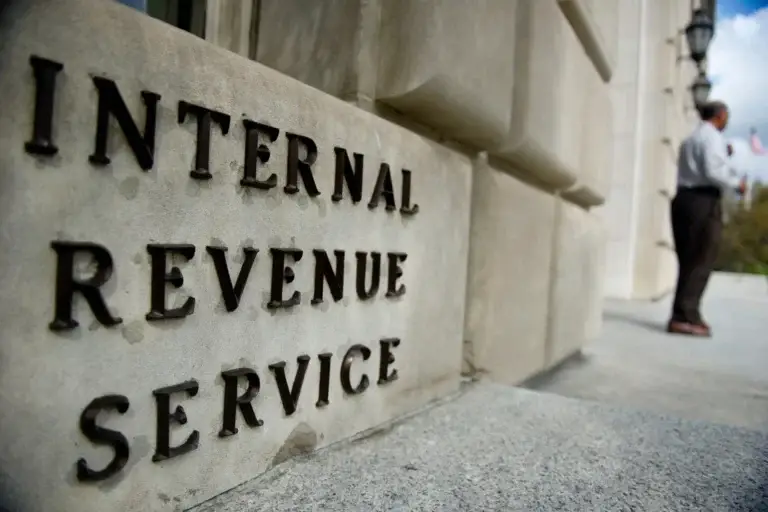
President Trump sued the IRS and the Treasury Department, claiming they owed him and his family at least $10 billion for the 2023 leak of his tax returns by a former government contractor. Three months later, the case ended with a headline-grabbing "settlement": a formal apology from the government, a new $1.776 billion "Anti-Weaponization Fund" to compensate other Trump allies who say they were unfairly investigated, and an order from the Acting Attorney General shielding the President and his family from future IRS audits.
A group of 35 non-party movants asked the Court to throw out that settlement, arguing it was "a fraud on the Court" cooked up between people who were never really on opposite sides. Judge Williams agreed. She ruled that because President Trump, as head of the Executive Branch, controls the very agencies he sued, there was never a genuine legal fight here — no adverseness, no real case or controversy, and therefore no lawsuit a federal court had any business resolving. She found the suit was filed for an improper purpose: to dress up a private, unreviewable deal in the legitimacy of a federal court case. She sanctioned Trump's attorneys under Rule 11 and used the Court's inherent authority to find bad faith on all sides, while declining to rule on the deeper question of whether the "settlement" itself is valid or enforceable.
Background
The story starts in 2023, when the Justice Department charged a government contractor named Charles Littlejohn with illegally leaking tax information belonging to "the nation's wealthiest people" — including, as Littlejohn admitted at his plea hearing, President Trump's own tax returns, which were shared with news outlets. Littlejohn was sentenced to five years in prison. At his plea hearing, Trump's then-personal attorney Alina Habba spoke on his behalf as a crime victim.
Federal law gives people whose tax returns are illegally disclosed the right to sue for damages, but only within two years of discovering the leak. Several other people affected by the same leak sued the IRS and Treasury during that window, and in every one of those cases, the Justice Department fought back hard — challenging the timing of the claims, disputing the damages, and arguing the government couldn't be held liable at all.
President Trump's case was different. It wasn't filed until January 29, 2026 — two years and three months after Habba's court appearance, and right at the edge of when such a claim could still be timely. The named plaintiffs were Trump, his sons Donald Jr. and Eric, and the Trump Organization. From there, the case moved unusually fast and unusually quietly. The government never filed an answer. Instead, three days before its deadline to respond, Trump's team requested a 90-day extension so the parties could "engage in discussions" toward a settlement, claiming the government had agreed. No government lawyer was ever identified as having consented, and no government attorney ever formally appeared in the case.
Because the President was suing agencies that answer to him, the Court grew concerned about whether it even had the authority to hear the case, and ordered both sides to explain why there was a genuine legal dispute here. The Court also appointed independent outside lawyers as amici curiae — friends of the court — to help sort through the jurisdictional questions. Neither side ever responded to the Court's concerns. Instead, before that deadline arrived, Trump's team simply filed a two-page notice voluntarily dismissing the case "with prejudice," arguing that such a notice automatically ends a case and strips the court of any further authority to review it.
The very next day, the Justice Department announced a "settlement": a formal apology to Trump, and a new $1.776 billion "Anti-Weaponization Fund," to be paid out of the Treasury Department's Judgment Fund, meant to compensate other people who claim they were targeted by "lawfare." The Treasury Department's top lawyer resigned the same day the fund was announced. Acting Attorney General Todd Blanche then issued a separate "Release Order" — signed by him alone, not by anyone representing the plaintiffs — that immunized Trump, his family, and his companies from a sweeping range of past and future claims, and appeared to bar the IRS from ever auditing them again.
Asked by Congress why this settlement had never been submitted to the judge overseeing the case, Blanche said there was "no judge" and "no mechanism" for review, since the case had already been dismissed. Two weeks later, in testimony before the House, Blanche reversed course on part of the deal, announcing the Anti-Weaponization Fund would not go forward after all — a decision he made unilaterally, without any sign that Trump's side had agreed to it. Six days after that, Trump nominated Blanche to be Attorney General on a permanent basis.
It was against this backdrop that 35 non-party movants — described in the record as former federal judges — asked the Court to reopen the case, arguing the entire episode was a fraud on the judicial process. The Court ordered Trump's team to respond to specific questions about collusion, deception, and whether the parties had ever really been adversaries. This Order is the Court's answer.
Legal Standard
Article III of the Constitution limits federal courts to deciding actual "cases" and "controversies." For more than a century, the Supreme Court has held that this means there must be genuine adverseness between the parties — a real dispute between people or entities with actually opposing interests. Courts don't hand down opinions to help one side simply confirm what it already wants to hear, and they especially won't do so when both "sides" of a case are, in substance, controlled by the same person or interest. As one of the oldest cases on this subject put it, courts have always treated an attempt to manufacture a "colorable dispute" to obtain a court's blessing — when no real conflict exists — as an abuse of the judicial process.
Separately, Federal Rule of Civil Procedure 11 requires that every lawsuit be filed for a legitimate purpose, not to manipulate the courts or manufacture leverage. Judges can raise this issue on their own, at any time, even after a case has been voluntarily dismissed. And beyond any specific rule, federal courts have "inherent authority" — power that exists independent of any statute — to sanction bad-faith conduct that abuses the judicial process itself.
Analysis
The Court's central finding is straightforward, even if the reasoning behind it is layered: President Trump cannot sue the IRS and the Treasury Department and pretend, for purposes of a lawsuit, that he isn't also the person in charge of both agencies.
The Constitution vests all executive power in the President. He appoints and can remove the Treasury Secretary and, by statute, can remove the IRS Commissioner at will — something he had, in fact, done as recently as August 2025. Beyond that, an executive order Trump issued in February 2025 states explicitly that no employee of the executive branch may take a legal position in litigation that contradicts the President's own view of the law, unless the President or Attorney General authorizes it in writing. In plain terms: nobody at the IRS or Treasury was ever allowed to fight this lawsuit, because doing so would have meant disagreeing with their own boss's legal position.
The people who actually signed the "settlement agreement" underscored the point. On Trump's side, it was signed by Daniel Epstein, a former White House lawyer who was never formally admitted to appear in this case. On the government's side, it was signed by Acting Attorney General Blanche and Associate Attorney General Stanley Woodward — both of whom, before joining the Justice Department, personally represented Trump or his associates in other high-profile legal matters, including the Mar-a-Lago documents case. Neither recused himself.
The Court contrasted this case with earlier lawsuits over the same tax-return leak, brought by private citizens rather than the President. In those cases — Griffin v. IRS and Safe Harbor International v. IRS — government lawyers showed up, fought motions to dismiss, asserted defenses, and litigated for years. Here, the government never appeared at all. The Court also compared the speed of this "settlement" to other major government settlements of similar size, which took years of contentious litigation to resolve — the Deepwater Horizon oil spill, the Volkswagen emissions scandal, the Enron securities fraud case — all of which involved actual adversarial fights before any money changed hands. This case was resolved in 109 days, with no pleadings filed by the government and no litigation of any kind.
The Justice Department tried to justify the Anti-Weaponization Fund by pointing to a past case, Keepseagle v. Vilsack, involving a settlement fund for Native American farmers who had been denied loans. But the Court noted that Keepseagle followed nearly a decade of hard-fought litigation, formal notice to claimants, and a public fairness hearing — nothing like what happened here. The Court also pointed out that a senior Justice Department official under the first Trump administration had once criticized the Keepseagle fund as one of the worst settlement structures in the Department's history, for spending taxpayer money "in ways never appropriated by Congress, with virtually no oversight." The government's later attempt to hold the same fund up as a model, the Court suggested, was hard to take seriously.
Perhaps the clearest sign that the two "sides" were never actually adverse was Blanche's unilateral decision to kill the Anti-Weaponization Fund. A party cannot unilaterally rewrite a settlement it has already signed — unless, the Court reasoned, there really was only one party controlling both sides of the deal all along. President Trump himself later told a reporter he wasn't sure whether the fund was "fully dead or just on hold," and that he would "have to ask the lawyers" — which the Court took as further evidence that the supposed opposing parties were, in reality, coordinating the entire time.
Adverseness and Control
Putting it all together, the Court concluded that President Trump is what the law calls the "dominus litis" — the master of the lawsuit — on both sides of the case. He sued agencies he controls, represented at points by lawyers who used to represent him personally, seeking a remedy — blanket immunity from future audits and a mechanism to funnel billions in taxpayer money to political allies — that no court could have lawfully awarded him even if the case had been real. The Release Order barring future IRS audits of Trump and his family, the Court noted, appears to directly violate a federal law that makes it illegal for anyone to ask the IRS to start or stop an audit of a specific taxpayer.
The Court was also blunt about the timing: had Trump brought this same lawsuit as a private citizen, promptly after learning of the leak, it might well have been resolved in a similarly short window on the merits. Instead, he waited until he was back in the White House and had placed his former personal lawyers in charge of the agencies being sued — including the very Attorney General who would later go on to sign away the government's audit powers over him.
Sanctions Imposed
Having found that the lawsuit was filed for an improper purpose, the Court imposed sanctions under both Rule 11 and its own inherent authority. Because the case had already been voluntarily dismissed before the Court could raise the issue, monetary Rule 11 sanctions were mostly off the table by rule — but the Court still ordered non-monetary consequences:
- Attorney Alejandro Brito, who signed the original complaint, was referred to the Florida Bar for possible disciplinary review.
- Attorney Daniel Epstein was barred from being admitted to practice in the Southern District of Florida for at least one year.
- All parties were barred from citing or relying on the "settlement agreement" as a legitimate settlement in any future court, agency, or arbitration proceeding.
Separately, relying on its inherent authority to police bad-faith conduct — a broader power that exists independent of any specific rule — the Court found that Trump's team acted in bad faith by pursuing claims they knew or should have known were likely time-barred and vastly inflated, and that the government acted in bad faith by abandoning its duty to defend the public treasury. The Court ruled that monetary sanctions are appropriate to cover the legal fees of the outside lawyers it had appointed to help sort through the jurisdictional questions — though those court-appointed lawyers have said they don't want reimbursement. The Court left the door open for other amici involved earlier in the case to seek payment of their own fees. Copies of the Order are also being sent to the state bar associations overseeing Blanche and Woodward, where ethics complaints are already pending.
Conclusion
Judge Williams closed with a line from John Adams — "Facts are stubborn things" — before laying out the facts she said made her ruling inevitable: Trump is President; he controls the Treasury Secretary, the IRS's chief executive, and effectively the entire Executive Branch's legal positions; for the 109 days this case was pending, no government lawyer ever filed anything defending it; and the government's actions matched exactly what Trump's own executive order required of it. From those facts, she wrote, only one conclusion was possible: "there was never adverseness between the Parties; there was never a case or controversy; and there was never a question as to who would prevail."
Why This Case Matters
This ruling doesn't decide whether the $1.776 billion Anti-Weaponization Fund or the audit-immunity order are themselves legal — Judge Williams was careful to say that question remains open for another day, possibly under a separate legal doctrine covering "fraud on the court." What she did decide is arguably more foundational: that a sitting President cannot use a federal lawsuit against his own subordinate agencies as a vehicle to manufacture the appearance of legal legitimacy for a deal his own administration designed and approved without any outside review. The ruling also puts a marker down on how far a president's control over the Justice Department can be stretched — the executive order at the center of this case claims that no government lawyer can take a legal position contrary to the President's own views, a claim the Court found was effectively fatal to any argument that the government could have defended itself here even if it had wanted to.
The sanctions themselves are largely symbolic rather than financial, but the referrals to state bar disciplinary authorities, the pro hac vice ban, and the prohibition on ever citing the "settlement" as valid all carry real professional and practical consequences for the lawyers involved. And because the underlying $1.776 billion fund and the audit-immunity order remain unresolved as legal matters, this likely isn't the last court to weigh in on this arrangement.
Endnotes
- Case citation: Trump v. Internal Revenue Serv., No. 1:26-cv-20609-KMW (S.D. Fla. July 13, 2026) (Williams, J.).
- Littlejohn's criminal case: United States v. Littlejohn, No. 23-cr-00343 (D.D.C. 2023) (guilty plea Oct. 12, 2023; sentenced Jan. 29, 2024, to 60 months' incarceration).
- Tax-return-disclosure private right of action and statute of limitations: 26 U.S.C. § 7431.
- Prohibition on executive-branch influence over IRS audits: 26 U.S.C. § 7217(a).
- Presidential appointment/removal authority over the IRS Commissioner: 26 U.S.C. § 7803(a)(1)(A), (D).
- Executive Order 14215, "Ensuring Accountability for All Agencies," 90 Fed. Reg. 10447 (Feb. 24, 2025), § 7 (governing DOJ legal positions and presidential control of litigation strategy).
- Article III case-or-controversy and adverseness doctrine: Muskrat v. United States, 219 U.S. 346 (1911); Lord v. Veazie, 49 U.S. 251 (1850); Aetna Life Ins. Co. of Hartford, Conn. v. Haworth, 300 U.S. 227 (1937); United States v. Windsor, 570 U.S. 744 (2013); GTE Sylvania, Inc. v. Consumers Union of the United States, Inc., 445 U.S. 375 (1980).
- Standard for finding lack of adverseness / "dominus litis" control: South Spring Hill Gold-Min. Co. v. Amador Medean Gold-Gold-Min. Co., 145 U.S. 300 (1892); 13 Wright & Miller's Federal Practice & Procedure § 3530 (3d ed. 2026).
- Voluntary dismissal and continuing jurisdiction over Rule 11/collateral issues: Cooter & Gell v. Hartmarx Corp., 496 U.S. 384 (1990); Absolute Activist Value Master Fund v. Devine, 998 F.3d 1258 (11th Cir. 2021); Hyde v. Irish, 962 F.3d 1306 (11th Cir. 2020).
- Rule 11 improper-purpose standard: Fed. R. Civ. P. 11(b), (c); Massengale v. Ray, 267 F.3d 1298 (11th Cir. 2001); Smith v. Psych. Sols., Inc., 750 F.3d 1253 (11th Cir. 2014).
- Inherent authority / bad-faith sanctions standard: Chambers v. NASCO, Inc., 501 U.S. 32 (1991); Barnes v. Dalton, 158 F.3d 1212 (11th Cir. 1998); Purchasing Power, LLC v. Bluestem Brands, Inc., 851 F.3d 1218 (11th Cir. 2017).
- Comparator private-plaintiff litigation: Griffin v. Internal Revenue Serv., No. 22-cv-24023 (S.D. Fla.); Safe Harbor Int'l, LLC v. Internal Revenue Serv., No. 25-cv-00139 (D. Md.).
- Comparator large-scale settlement litigation cited by the Court: In re Deepwater Horizon oil spill MDL, No. 2179 (E.D. La.); In re WorldCom, Inc. Sec. Litig., 294 F. Supp. 2d 392 (S.D.N.Y. 2003); FTC v. Amazon.com, Inc., No. 23-cv-01495 (W.D. Wash.); In re: Volkswagen "Clean Diesel" Litig., No. 15-MD-02672 (N.D. Cal.); In re: Enron Corp. Sec., No. 02-md-01446 (S.D. Tex.).
- Keepseagle settlement history: Keepseagle v. Vilsack, 118 F. Supp. 3d 98 (D.D.C. 2015); Keepseagle v. Perdue, 856 F.3d 1039 (D.D.C. 2017) (Rogers, J., dissenting).
- Rule 60(d)(3) fraud-on-the-court standard (raised by non-party movants, not decided here): Fed. R. Civ. P. 60(d)(3); Chambers v. NASCO, Inc., 501 U.S. 32, 44 (1991).
- News reporting referenced in the underlying order: Richard Rubin, Wall Street Journal (Jan. 16, 2024); Andrew Duehren, New York Times (May 18 & 19, 2026); Hailey Fuchs & Jordain Carney, Politico (June 2, 2026); Sabrina Lam, Politico (May 22, 2026); Katelyn Polantz, CNN (May 14, 2026); Sarah Ferris et al., CNN (June 3, 2026); Daniel Lippman, Politico (June 10, 2026); Joseph Gedeon, The Guardian (Oct. 22, 2025).
- John Adams quotation cited by the Court in its conclusion, drawn from his 1770 defense arguments in the Boston Massacre trials.
Educational Disclaimer
This article is provided for general educational and informational purposes only. It is a plain-English summary and does not constitute legal advice, and it should not be relied upon as a substitute for consulting a licensed attorney about any specific legal matter. Every effort has been made to accurately reflect the holding and reasoning of the underlying court order, but readers seeking the authoritative legal text should consult the original opinion filed in the case docket.