Judge Refuses to Pause Sanctions Against Trump and His Lawyers in IRS Case
Case: Trump v. Internal Revenue Service, U.S. District Court for the Southern District of Florida, Case No. 26-20609-CV-WILLIAMS. Order issued September 14, 2026 by U.S. District Judge Kathleen M. Williams.
Summary
A federal judge has refused to pause sanctions she imposed on President Trump, his family members, and two of his attorneys, rejecting their request to put those penalties on hold while they appeal. The ruling means a Florida Bar referral for one attorney, a one-year ban on another attorney seeking special admission to practice in the district, and a restriction on how the parties can describe a disputed "settlement" will all remain in effect during the appeal.
The sanctions trace back to a lawsuit President Trump and his relatives filed against the IRS and the Treasury Department, which the judge later found was never a real legal fight between opposing sides. She concluded the case had been used to manufacture the appearance of a court-approved "settlement," including a proposed $1.776 billion fund and a grant of blanket legal immunity, without ever giving the court a genuine dispute to resolve.
Background of the Case
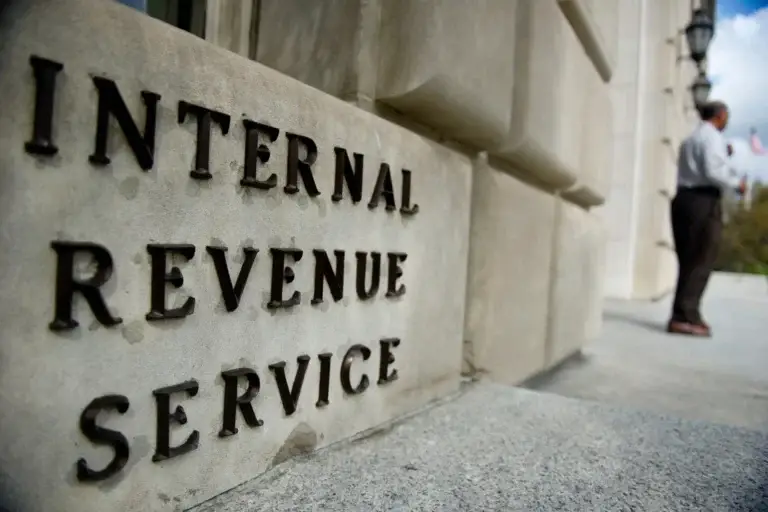
President Trump, joined by Donald Trump Jr., Eric Trump, and the Trump Organization, sued the IRS and Treasury Department in January 2026. As the case moved forward, Judge Williams raised concerns on her own about whether there was even a real legal dispute between the parties, since the Trump administration controls the agencies being sued. She ordered both sides to explain the basis for the case and appointed independent legal experts, known as amici curiae, to help her sort through the jurisdictional questions. Neither side ever filed the explanation the judge asked for, and the government never formally appeared in the case to defend itself.
Then, three days before the government's deadline to respond passed, the plaintiffs abruptly dropped the case entirely. The same day, the Justice Department announced that a "settlement" had been reached, unveiling a proposed $1.776 billion "Anti-Weaponization Fund" meant to compensate people who claimed to have been targeted by politically motivated law enforcement. The next day, the Justice Department's then-acting head, Todd Blanche, signed a memo granting the Trump plaintiffs and their affiliates broad immunity from a range of other legal and regulatory matters.
Thirty-five former federal judges filed a brief urging the court to reopen the case, arguing the entire episode looked like a scheme to dress up a private arrangement as an official court settlement. Rather than reopen the case outright, Judge Williams ordered the plaintiffs to explain themselves: were the two sides ever truly adversaries, was the court misled into dismissing the case, and had the court itself been the target of a fraud? After reviewing the plaintiffs' response, the judge issued a lengthy order in July 2026 finding that the parties had acted in bad faith and misused the judicial system. That order imposed three penalties: a referral of attorney Alejandro Brito to the Florida Bar for possible discipline, a one-year bar on attorney Daniel Epstein seeking special permission to appear in cases in the district, and a rule barring any party from citing the "settlement agreement" in future official proceedings as proof that a real settlement was reached in this case. Trump, his family members, and both attorneys then asked the judge to pause, or "stay," those sanctions while they pursued an appeal. This new order resolves that request.
Legal Standard
Under longstanding Supreme Court precedent, a stay pending appeal is not something a party is automatically entitled to, even if it might otherwise suffer harm without one.1 A court deciding whether to grant one weighs four things: whether the party asking for the stay is likely to win on appeal, whether that party would suffer irreparable harm without a stay, whether a stay would seriously hurt anyone else involved in the case, and where the public interest lies. Courts treat the first two factors, likelihood of success and irreparable harm, as the most important.
The Court's Analysis
Likelihood of Success on Appeal
Judge Williams first found that the sanctions order may not even be eligible for an immediate appeal. To appeal a court order right away, rather than waiting until the whole case is finished, the order generally has to be final or to qualify for a narrow exception. The judge rejected the argument that her restriction on referencing the "settlement agreement" counted as an injunction that could be appealed immediately, finding it caused, at most, minimal harm because it only limits how the parties can describe that agreement in official proceedings. She also noted the sanctions order remains unresolved in another respect: she has not yet decided how much, if anything, the independent legal experts who assisted the court should be paid in fees.
On the merits, the judge reaffirmed her earlier finding that the plaintiffs and the government were never truly adverse to one another, as the Constitution requires for a real case to exist. She pointed to President Trump's control over the Treasury Secretary, the IRS's chief executive, and the Justice Department's litigation strategy, control she said was reinforced both by longstanding constitutional principles and by a recent executive order and Supreme Court decision expanding presidential authority over the executive branch. She also noted that for the roughly three and a half months the case was pending, no government lawyer ever formally appeared to defend it, a stark contrast, she said, to how the same defendants and defense lawyers have handled other, genuinely contested lawsuits.
The judge also rejected the argument that she had violated the plaintiffs' right to notice and a fair process before imposing sanctions. She found the plaintiffs had ample warning that sanctions were being considered and a full opportunity to respond, and that she was entitled to take note of public information, including news coverage, other court dockets, and public statements by the parties, to provide context for what had happened, even though she did not rely on that material to establish the key facts underlying her ruling. She also rejected the claim that she needed to make separate, individualized findings against each sanctioned attorney, noting that the two lawyers had acted in concert and did not try to distinguish their own conduct from one another.
Finally, the judge rejected the argument that barring the parties from citing the "settlement agreement" as proof of an actual settlement amounted to an unconstitutional restriction on speech. She emphasized that litigants do not have unlimited First Amendment rights inside a courtroom, and that the restriction is narrow: it only stops the parties from using the document as evidence of a real settlement in official proceedings connected to this case. It does not stop them from discussing the agreement generally or from relying on its actual terms in other contexts. She found the restriction was a reasonable and narrowly tailored response to conduct she had already found was aimed at misleading the court and the public.
Irreparable Harm
The judge also found that none of the three sanctions would cause the kind of immediate, serious harm needed to justify a stay. A referral to the Florida Bar, she explained, simply triggers further review and does not itself establish any harm, let alone an urgent one. The one-year restriction on attorney Epstein seeking special permission to appear in the district was likewise found not to cause real harm: it only affects future filings, does not disturb his existing representation of clients in the case, and even under the district's own local rules, would affect at most a handful of future matters. And on the restriction concerning the "settlement agreement," the judge found the plaintiffs had not pointed to any ongoing official proceeding where they currently need to invoke the document as proof of a settlement, meaning any harm remains speculative rather than immediate.
Harm to Others and the Public Interest
The judge found the remaining two factors also weighed against a stay. The plaintiffs had not identified any other parties who would be hurt by letting the sanctions stand, nor any specific harm those parties would suffer. On the public interest, she wrote that people who bring their disputes to court have a strong interest in knowing the same rules apply to everyone, regardless of position or political affiliation, and that pausing the consequences of the court's findings would undercut public confidence in the judiciary's ability to enforce its own orders.
The Court's Ruling
Judge Williams denied the motion to stay in full. All three sanctions from the July 2026 order, the Florida Bar referral, the one-year restriction on special admission, and the limit on citing the "settlement agreement" as proof of a real settlement, remain in effect while the appeal moves forward.
What Happens Next
The underlying appeal to the U.S. Court of Appeals for the Eleventh Circuit continues on its own track. Because the stay was denied, the sanctions apply in the meantime: the Florida Bar referral proceeds, attorney Epstein remains barred from seeking special admission in the district for the coming year, and none of the parties may cite the "settlement agreement" in official proceedings as evidence that a genuine settlement was reached in this case. A separate dispute over how much, if anything, the independent legal experts should be paid in fees also remains unresolved before the district court.
Why This Order Matters
This case has become a closely watched test of whether federal courts can push back when litigants are accused of using a lawsuit, and its dismissal, to manufacture the appearance of an official, court-sanctioned resolution. Judge Williams's underlying findings, that the President's control over the very agencies he sued meant there was never a genuine legal dispute, and that the episode was used to create legitimacy for a private arrangement, raise broader questions about presidential conflicts of interest and the limits of using the federal courts for purposes other than resolving real disputes. By refusing to pause the consequences while the appeal plays out, the judge signaled that she views the integrity of the judicial process, and the public's confidence in it, as outweighing the parties' interest in delaying accountability.
Endnotes
- Nken v. Holder, 556 U.S. 418 (2009) (establishing the four-factor test for a stay pending appeal).
- 28 U.S.C. § 1291 (final judgment rule governing what orders may be appealed).
- Cox v. Administrator, U.S. Steel & Carnegie, 17 F.3d 1386 (11th Cir. 1994) (burden of establishing appellate jurisdiction).
- S.E.C. v. Complete Business Solutions Group, Inc., No. 24-12350, 2024 WL 4785772 (11th Cir. 2024) (standard for what counts as an appealable injunction-related order).
- Hibiscus Associates Ltd. v. Board of Trustees of Policeman and Fireman Retirement System of City of Detroit, 50 F.3d 908 (11th Cir. 1995) (finality requires a determined fee award).
- Executive Order 14215 and Trump v. Slaughter, 146 S. Ct. 2283 (2026) (cited regarding the scope of presidential authority over executive branch agencies).
- Ebrahimi v. City of Huntsville Board of Education, 114 F.3d 162 (11th Cir. 1997) (courts' independent duty to police their own jurisdiction).
- DaimlerChrysler A.G. v. Bull, 331 F.3d 1247 (11th Cir. 2003), and Johnson v. 27th Avenue Caraf, Inc., 9 F.4th 1300 (11th Cir. 2021) (standards for adequate notice before sanctions).
- Seattle Times Co. v. Rhinehart, 467 U.S. 20 (1984); N.A.A.C.P. v. Claiborne Hardware Co., 458 U.S. 886 (1982); Gentile v. State Bar of Nevada, 501 U.S. 1030 (1991); Bill Johnson's Restaurants, Inc. v. N.L.R.B., 461 U.S. 731 (1983); and Madsen v. Women's Health Center, Inc., 512 U.S. 753 (1994) (limits on First Amendment protection for speech in litigation).
- Fed. R. Civ. P. 11 (governing sanctions for improper filings and representations to the court).
- Riccard v. Prudential Insurance Co., 307 F.3d 1277 (11th Cir. 2002); Donaldson v. Clark, 819 F.2d 1551 (11th Cir. 1987); and In re Kunstler, 914 F.2d 505 (4th Cir. 1990) (discretion to impose sanctions without individualized findings where parties acted in concert).
- Siegel v. LePore, 234 F.3d 1163 (11th Cir. 2000), and Elrod v. Burns, 427 U.S. 347 (1976) (standard for "actual and imminent" irreparable harm).
- Adkins v. Christie, 227 F. App'x 804 (11th Cir. 2007) (a bar referral alone does not establish reputational harm).
- S.D. Fla. L.R. 4(b)(2) (local rule defining "general practice" for pro hac vice admission purposes).
- Kleiner v. First National Bank of Atlanta, 751 F.2d 1193 (11th Cir. 1985) (restraints on litigant speech in the interest of a fair proceeding).
This article is a plain-language summary of a public federal court order, prepared for general educational purposes. It is not legal advice, and readers with questions about how this ruling may affect them should consult a licensed attorney.